Unlock Your Personality Through Colors
Get Started
True Colors Personality Test: Your Online Assessment
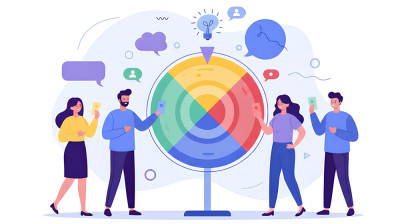 Decode Your Color Code: A Comprehensive Guide to Core Motives
New Updates
The Complete Guide to the True Colors Personality Method
What Is the True Colors Approach?
The True Colors approach translates complex behavioral patterns into a vivid, easy-to-remember color system that hi...

Discover the Power of Color Typing: an In-Depth Guide to the True Colors Approach
What the Color Test Is and Why It Captivates So Many People
The color-based approach to personality makes complex human behavior surprisingly approac...
Online Color Personality Test: A Deep Guide to Color-Based Self-Discovery
What Color-Based Personality Profiling Really Means
Color-driven personality frameworks translate complex psychological patterns into vivid, memorabl...
Take Color Personality Test Online
Get StartedSee Your True Self Through a Personality Color Test!
People have always searched for reliable, memorable ways to describe how they think, decide, and interact. A color-based framework turns abstract psychology into vivid language, making complex tendencies easy to recognize in yourself and others. By translating temperament into four recognizable hues, the model gives teams a shared vocabulary, and it equips families with a gentle, friendly tool for navigating differences. The simplicity is only the entry point; the value emerges when those insights shape communication, delegation, and conflict resolution in real situations.
Inside workshops and classrooms, facilitators often begin with clear stories that reveal how each color processes information and responds under pressure. In this context, the widely referenced true colors personality test becomes a springboard for dialogue about strengths, needs, and blind spots. Rather than boxing anyone in, the exercise invites nuance by acknowledging blenads, contexts, and growth over time.
Learners usually report that the visuals and metaphors make their discoveries stick, long after the session ends. For many, the accessible color personality test acts as a bridge between personal reflection and practical behavior change at work and at home. That combination of clarity and actionable advice explains why the approach continues to gain traction across industries, schools, and community groups.

How the Four Colors Describe Core Motivations and Communication Styles
At the heart of the framework are four color energies that represent distinct motivations and habitual styles. One emphasizes reliability, structure, and accountability. Another highlights empathy, harmony, and connection. A third leans into curiosity, analysis, and systems thinking. The fourth celebrates agility, spontaneity, and results under pressure. Everyone blends all four to some degree, yet most people display a dominant pair that shows up consistently in choices and conversations.
Understanding these energies helps you tailor words, pace, and expectations so others can receive your message. In some settings, teams also compare adjacent models, such as the color code personality test to evaluate how different frameworks label needs or define stress responses. That comparative view makes it easier to avoid stereotyping and encourages people to meet colleagues where they are. When you map personal triggers and strengths, negotiation and collaboration become easier to navigate. Educators, for example, often introduce a personality color test to help students appreciate diverse learning styles before group projects begin. With that grounding, participants can co-create norms that keep momentum high and reduce friction during tight deadlines.
- Gold-like energy: plans ahead, honors commitments, values stability.
- Blue-like energy: builds trust, reads context, nurtures relationships.
- Green-like energy: seeks logic, designs systems, improves processes.
- Orange-like energy: adapts quickly, solves in real time, embraces challenge.
Benefits You Can Expect in Careers, Classrooms, and Communities
Practical outcomes matter more than labels, and this is where the color approach excels. Managers gain language for role fit and feedback, while individual contributors learn how to request the context or autonomy they need. Conflict begins to feel less personal because disagreements are reframed as differences in priorities or information processing, not character flaws. Family conversations also soften when people can name their needs without blame.
Organizations that train both leaders and individual contributors often notice faster alignment because teams anticipate each other’s decision patterns. In those rollouts, some practitioners adopt the real colors personality test to complement existing learning paths across departments. The shared terminology accelerates onboarding, streamlines meetings, and builds stronger partnerships with stakeholders. Budget, time, and curiosity all influence how people begin exploring the framework. For early exploration, learners sometimes try a free true colors personality test as a low-barrier starting point before joining a facilitated workshop. Afterward, action planning connects the insights to real goals, such as improving one-on-ones, refining handoffs, or redesigning team rituals.
- Improve feedback conversations with tailored phrasing and pacing.
- Delegate by matching tasks to motivational drivers and strengths.
- Reduce burnout by aligning roles with preferred problem-solving styles.
- Boost meeting effectiveness with color-aware agendas and formats.
Comparing Color Tests and When to Use Each
Different color-based models share overlapping ideas but vary in emphasis, language, and assessment length. Choosing the right fit depends on your goals: quick team icebreaker, deeper coaching program, or a schoolwide communication initiative. Before adopting any instrument, clarify how findings will be used, who will be trained, and what success looks like after three to six months. Clarity on outcomes ensures the activity becomes a catalyst for better collaboration rather than a one-off event.
| Focus | Primary Strengths | Common Pitfalls | Best Use Cases |
|---|---|---|---|
| Structure & Reliability | Planning, consistency, execution | Rigidity under change, over-checking | Compliance, operations, project governance |
| Empathy & Harmony | Trust-building, facilitation, morale | Conflict avoidance, decision delays | Customer care, HR, team health initiatives |
| Analysis & Systems | Root-cause thinking, optimization | Over-analysis, reduced spontaneity | Product strategy, QA, process design |
| Action & Agility | Rapid problem-solving, resilience | Impulsivity, detail gaps | Sales, crisis response, field operations |
When evaluating options, learning leaders often map how personality test colors will influence hiring, feedback, and cross-functional rituals. The point is to create a durable, shared language so collaboration improves steadily across quarters, not just during a single offsite.
How to Take the Assessment and Interpret Your Pattern
Preparation is simple: answer honestly about what you do most naturally, not what you think you should do. Set aside a quiet moment, remove distractions, and notice your first instinctive choice on each item. After you complete the questionnaire, review the profile narrative slowly and underline phrases that genuinely sound like you. Insight grows when you connect those lines to recent conversations, decisions, and stressful moments. Many people extend reflection with journaling prompts or a coaching session to turn insights into behavior shifts. In that spirit, tools branded as my personality test true colors can help you track weekly patterns and pair them with deliberate experiments. Over several weeks, small adjustments become reliable habits that elevate your performance and relationships.
Team workshops often begin with a quick visual self-sort before a guided discussion. Facilitators sometimes start with a 4-color personality test so participants can share stories about when each energy showed up at its best. Those examples give life to the language and make future feedback less intimidating. Cost and access vary widely, which is why pilots help you compare formats before scaling. For organizations testing the waters, coordinators occasionally choose a free color code personality test to gauge appetite and fit among different departments. Once momentum builds, a more comprehensive rollout ties insights to coaching, metrics, and performance conversations.
Validity, Limitations, and Responsible Use
No framework captures the entire richness of a human being, so humility is essential. These tools work best as conversation starters that reduce friction and sharpen self-awareness. The risk lies in overconfidence: treating color labels as destiny or using them to justify poor behavior. Responsible practitioners counter that risk with strong facilitation, clear norms, and follow-through.
Educators seeking broader coverage sometimes supplement color insights with strengths, motives, and values measures. In blended programs, a department might include a true colors personality types test alongside feedback to triangulate patterns. That layered view keeps conclusions grounded in multiple data points rather than one snapshot. Access models also matter for equity and inclusion goals. To widen participation, learning teams may circulate a color personality test free introduction so employees can preview ideas before a formal session. With thoughtful design, the entire cohort benefits from consistent language, respectful curiosity, and measurable behavior change.
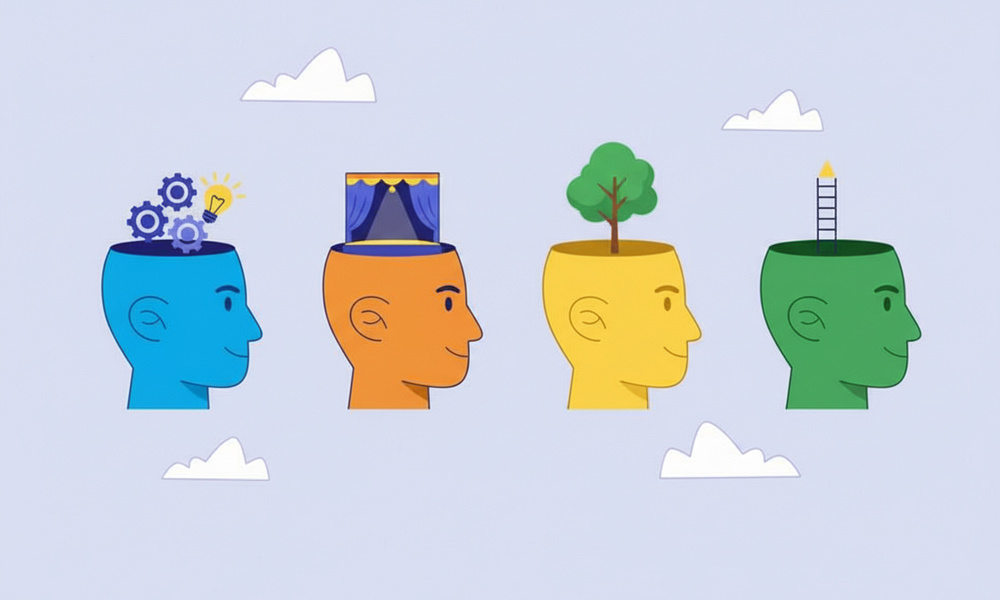
Turning Insight Into Daily Action
Insights without application fade quickly, so build small rituals that keep learnings alive. Start meetings with quick check-ins tuned to different needs, rotate facilitation styles, and match project roles to motivational energy. After decisions, debrief how the group balanced thoroughness with speed, and note which moments felt easy or strained for each person.
During longer initiatives, track progress with short reflections and peer feedback. In development cohorts, facilitators sometimes use a color personality traits test to capture how strengths evolve across milestones. The meta-skill is noticing context and flexing on purpose rather than reacting on autopilot.
Remote and hybrid teams can also embed color-aware practices into digital workflows and sprint ceremonies. For distributed groups, leaders frequently select a color personality test online format to reduce friction while maintaining shared language. Combine that with asynchronous notes that translate preferences into concrete working agreements.
- Create a “how to work with me” page that lists needs, triggers, and energizers.
- Design agendas with clear outcomes and timeboxes that respect different styles.
- Pair opposites on key decisions to balance analysis with momentum.
- Celebrate wins in multiple ways so every energy feels seen and valued.
Take Color Personality Test Online
Get StartedFrequently Asked Questions About Real Colors Personality Test
-
Is this test scientifically valid?
It rests on decades of temperament research and practical field use, but it should be treated as a guide rather than a diagnostic instrument. The strongest results emerge when you combine it with coaching, peer feedback, and real-world experiments that test and refine your assumptions about yourself.
-
Will my result change over time?
Your core motivations tend to be stable, yet context can shift how strongly each color shows up. Major life events, new roles, or fresh skills may rebalance your expression, which is why periodic reflection is valuable for keeping self-awareness current.
-
Can this help with conflict at work?
Yes, because disagreements are reframed as differences in priorities, language, or pace. After both sides' names are clearly stated, teams can design ground rules that honor structure, empathy, analysis, and agility, so discussions turn constructive rather than personal.
-
How is it different from other popular assessments?
The color language is fast to learn, memorable, and simple to apply in meetings without a manual. Visual learners often appreciate a color wheel personality test depiction when comparing patterns across colleagues in a shared workspace.
-
What should I do right after I get my results?
Pick one communication habit to adjust for a week, such as asking clarifying questions sooner or summarizing actions at the end of meetings. Then gather feedback on what improved and iterate with a second micro-experiment the following week.