
The Complete Guide to the True Colors Personality Method
Take Color Personality Test Online
Get StartedWhat Is the True Colors Approach?
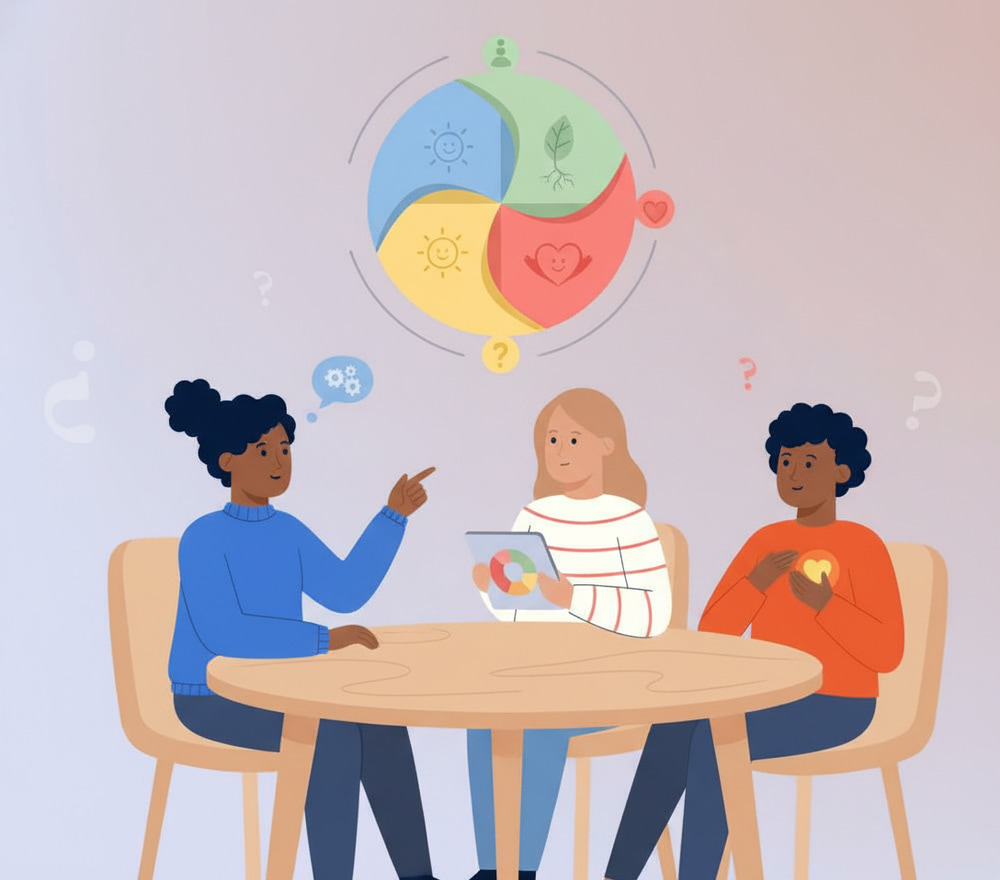
The True Colors approach translates complex behavioral patterns into a vivid, easy-to-remember color system that highlights how people prefer to think, communicate, and collaborate. Built on decades of temperament theory, it turns abstract psychology into practical language you can actually use at work, at home, and within your community. Instead of memorizing dense trait lists, you learn to recognize motivational styles and stress responses through color-driven archetypes that feel natural and intuitive. The result is a framework that sparks self-awareness and reduces friction, especially when diverse personalities need to move in the same direction.
In that spirit, many newcomers look for a free true colors personality test as a simple on-ramp to understanding temperament, motivation, and communication within a structured, color-coded model. The underlying method typically emphasizes four patterns that commonly surface across different situations and roles. You’ll notice that the colors are not rigid boxes, because most people blend traits from each category depending on context and goals. This flexibility helps you apply the insights to new environments, whether you’re navigating a career transition or joining a new team with unfamiliar dynamics.
The core colors often broadly map to action-oriented pragmatists, empathetic connectors, analytical strategists, and organized planners, and each brings distinct strengths to problem-solving. When costs are a concern, seekers often try a color personality test free option to experiment with the model before investing in a workshop or coaching program. Even an introductory assessment can reveal which situations energize you and which demand compensating strategies. Over time, you’ll develop a richer vocabulary for your preferences, and you’ll be able to spot patterns faster in colleagues, clients, or partners.
Benefits and Real-World Value
Practical outcomes matter more than labels, and that is where color-based insights shine in everyday decision-making. The framework gives you a shorthand for interpreting behavior under pressure, which accelerates conflict resolution and improves planning. For quick self-knowledge, readers appreciate a free color personality test that provides credible language to articulate strengths without burying them in jargon. When people can name their tendencies, they gain the freedom to choose responses instead of falling back on habits that may not fit the situation. That clarity also boosts confidence during interviews, performance reviews, and goal-setting conversations.
Teams that use a shared color vocabulary often streamline meetings, remove guesswork from delegation, and minimize miscommunication across disciplines. Professionals who need to sell ideas to different audiences learn to frame messages for diverse temperaments, saving time and reducing rework. To explore the system with minimal barriers, some evaluators start with a free 4 color personality test and then expand into deeper coaching around stress triggers, blind spots, and growth plans. By mapping a project’s roles to complementary color strengths, leaders can balance execution speed, creative problem-solving, process rigor, and stakeholder empathy.
- Faster alignment on goals and expectations across functions.
- Better handoffs between analytical, relational, and tactical responsibilities.
- Cleaner feedback loops that respect different processing speeds.
- Improved customer conversations through tailored messaging styles.
- Clearer pathways for personal development and skill-building.
Crucially, the model is descriptive rather than prescriptive, so you can flex your style without abandoning your core strengths. That balance helps people grow while staying authentic to their values and preferred ways of working.
How the Assessment Works and What to Expect
Most color-based assessments present short prompts or word clusters and ask you to select the most and least like you, then aggregate the choices into a color profile. Some prefer a true colors personality test free trial to understand the prompts and scoring logic before committing to a longer version with richer feedback. Scoring usually yields a primary color, a strong secondary, and two supporting patterns, and the resulting blend explains your default style in communication, planning, conflict, and decision-making. The best practice is to answer quickly and honestly, focusing on typical behavior rather than idealized traits.
Online formats can provide instant reports, quick tips, and basic development suggestions you can apply right away. When exploring the entry-level options, many people try a free online color personality test to experience the interface and review a concise summary of their profile. Look for assessments that describe stress responses and provide practical strategies for adapting your style in different scenarios. It also helps if the report includes examples of how your color shows up in meetings, emails, and time management, because those cues make the insights easier to implement immediately.
| Color | Core Drivers | Communication Style | Stress Triggers |
|---|---|---|---|
| Orange | Action, variety, tactical solutions | Direct, energetic, spontaneous | Rigid rules, slow decisions, micromanagement |
| Blue | Connection, harmony, values | Empathetic, supportive, collaborative | Cold logic, conflict escalation, disconnection |
| Green | Logic, competence, systems | Precise, independent, analytical | Emotional volatility, inefficiency, ambiguity |
| Gold | Order, reliability, planning | Structured, thorough, organized | Last-minute changes, chaos, unclear roles |
Use your color blend as a starting point, then validate it through feedback and real-world experiments. When the model guides meaningful conversations about needs and expectations, it becomes a practical toolkit rather than a static label. Over time, your adaptability improves as you learn to dial traits up or down depending on the task, stakes, and audience.
Taking the Assessment Online: Steps and Tips
Digital delivery makes it simple to try the model on your own schedule while preserving essential guidance. To get a feel for the experience, many learners start with a free true colors personality test online pathway that offers a quick scan of preferences without a paywall. Before you begin, set aside uninterrupted time and answer items based on your typical behavior rather than recent one-off events. Consistency across items will produce a clearer pattern, and that clarity makes your development plan more actionable from the outset.
Reports vary in length and depth, but most cover strengths, blind spots, and recommended adjustments for common workplace scenarios. After completing an introductory screen, some participants review insights from a free color personality test online to decide whether they want coaching, group workshops, or advanced materials. Save your results, highlight lines that resonate, and capture examples from your recent projects that match the description. Those notes will help translate concepts into behaviors you can test and refine over the next few weeks.
- Block 10–15 minutes to answer without distractions.
- Respond from your baseline, not your idealized self.
- Compare your results with feedback from colleagues or mentors.
- Pick two micro-habits to try in meetings or planning sessions.
- Revisit your notes after two weeks and iterate on what worked.
As you evaluate different options, you might encounter alternatives built on overlapping temperament ideas and predictive typologies. In those comparisons, some people sample a free color code personality test to see how the language differs and whether the recommendations feel practical for their environment. The key is to focus on clarity and usefulness, adopting resources that lead to visible improvement in collaboration, focus, and decision quality.
Use Cases for Teams, Careers, and Relationships
Color profiles are especially helpful when teams need to communicate quickly under pressure without losing nuance. For remote collaboration, shared language accelerates onboarding and helps new contributors read cultural signals faster. When you want to try a lightweight screen before your next project kickoff, you could explore a true colors personality test free online approach to capture the group’s blend and shape meeting norms. The result is fewer misunderstandings about priorities and more alignment on how to balance speed with thoroughness in sprint planning and review cycles.
Career planning also benefits because the color lens highlights roles that match your energy and preferred ways of delivering value. In transition moments, some professionals take a free true color personality test to name the conditions where they do their best work and the environments that deplete them. That clarity supports better job targeting, stronger interview stories, and a smoother ramp-up when responsibilities evolve. Couples and families can use the same insights to strengthen empathy, create household systems that fit natural tendencies, and reduce recurring conflicts about routines or schedules.
- Design meetings with diverse color roles: vision, analysis, planning, and execution.
- Tailor feedback: data-rich for analysts, values-centered for connectors, concise for doers, structured for planners.
- Match tasks to strengths during crunch time to preserve quality and morale.
- Use color cues to craft job descriptions that attract complementary talent.
- Build rituals that honor different needs for reflection, spontaneity, and certainty.
FAQ: True Colors Testing
Below are concise answers to common questions that arise when people start exploring color-based assessments. Use these as quick reference points, then follow up with deeper practice, feedback, and reflection to embed the insights in daily routines.
Is a short assessment accurate enough to be useful?
Brief instruments can surface a credible starting point, especially when the prompts are well designed and you answer from your typical behavior. Treat the initial profile as a hypothesis, compare it with feedback, and refine your understanding as you apply the ideas to real situations over time.
How do I use my color blend without stereotyping others?
Focus on needs, preferences, and contexts rather than fixed labels, and remember that people flex across colors based on goals and pressure. Ask clarifying questions, summarize what you heard, and adapt your style to the other person’s cues to keep collaboration respectful and effective.
What’s the best way to practice the insights at work?
Pick one meeting and one writing task each week to adjust for audience, then record what changed in outcomes or engagement. Over a month, these small experiments build reliable habits that translate into faster alignment, clearer decisions, and fewer avoidable conflicts in your workflow.
Can I prepare for a workshop using online resources?
Absolutely; review an introductory guide, gather recent examples of success and friction, and note questions you want to test in group exercises. In some cases, facilitators recommend previewing results from a free real colors personality test so participants arrive with shared language for practice.
How often should I revisit my results?
Reassess when your role, team composition, or strategic priorities change, because new demands can shift how your colors show up in practice. A quarterly review keeps insights fresh and helps you sustain momentum as responsibilities evolve and projects cycle through different phases.