
Unlocking Your Colors: A Comprehensive Guide to a Fan-Favorite Personality Test
Take Color Personality Test Online
Get StartedWhat the Colors Mean and Why They Matter
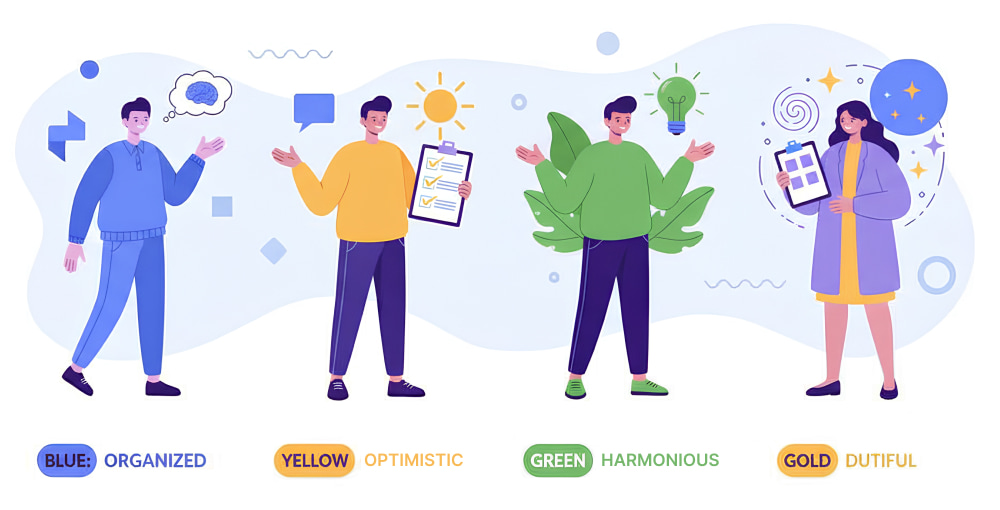
The color-based approach to personality offers an accessible, visual way to understand core motivations, decision patterns, and communication preferences. Instead of dense jargon, it uses vibrant color archetypes to map how people process information, express empathy, seek structure, pursue innovation, and take action. This clarity helps individuals recognize their strengths and blind spots quickly, while also appreciating the distinctive value others bring to a team or relationship.
Beyond self-knowledge, the framework shines because it is memorable in everyday conversations and easy to apply in real scenarios. Fans often refer to it as the my personality test true colors framework because the color labels feel intuitive, sticky, and practical when navigating real-life choices. With color lenses, a team can decipher why a meeting felt chaotic to someone who craves order, or why a bold idea energized one colleague while overwhelming another. The model thus becomes a shared language that reduces conflict and builds trust.
- Improves empathy by translating complex traits into simple color cues.
- Accelerates team alignment through a common, nonjudgmental vocabulary.
- Boosts self-awareness that leads to better habits and smarter decisions.
- Strengthens communication by surfacing preferred styles and stress signals.
Most importantly, the methodology is fun, which increases adoption. People remember colors long after a workshop ends, and that retention drives real behavior change. Over time, the color lens becomes a daily compass for collaboration, leadership, and personal growth.
How the Assessment Works and What You Receive
The assessment guides you through a series of rapid, reflective choices that surface your dominant and secondary color patterns. Rather than boxing you into a rigid label, it maps a spectrum, acknowledging that people flex across contexts. You will see which situations amplify your strengths, which environments drain your energy, and how to pivot with purpose when stakes rise.
Many participants appreciate that the process is brief yet revealing, and that results translate immediately into real-world behaviors. Enthusiasts often describe the experience as the my color personality test journey because it feels tailored and interactive, not generic. The report you receive doesn’t stop at a description; it offers practical prompts to apply insights in relationships, projects, and decision-making.
- A clear color profile with primary and secondary tendencies.
- Descriptions of motivators, values, and stress triggers for each color.
- Communication do’s and don’ts that improve rapport instantly.
- Personalized action steps for career, learning, and leadership.
- Reflection exercises that help you revisit and deepen your insights.
Expect a blend of narrative guidance, concise checklists, and scenario-based advice. The structure is designed to support multiple learning styles, ensuring you can revisit and refine your understanding as you grow.
Benefits for Personal Growth, Teams, and Leadership
Color insights illuminate the difference between intention and impact. You may intend to be helpful by offering detailed plans, while others perceive rigidity; you may aim to be strategic with probing questions, yet come across as detached. Recognizing this gap unlocks options: soften tone, vary pace, or sequence ideas differently to match your audience’s needs. The payoff is immediate in performance conversations, brainstorming, and customer interactions.
For individuals, the model clarifies motivations so you can choose work that energizes you and set boundaries that protect your well-being. Practitioners often highlight how the my true color personality test perspective reframes conflict as a style contrast rather than a personal flaw. For teams, it exposes complementary strengths: the big-picture visionary, the empathetic facilitator, the meticulous planner, and the fast-moving problem-solver. Leaders gain a toolkit to balance these energies and assign roles wisely.
- Reduce friction by aligning task types with natural strengths.
- Improve meetings with color-aware facilitation, pacing, and sequencing.
- Strengthen feedback by matching tone and evidence to listener preferences.
- Enhance change management by anticipating typical stress responses.
Organizations that embed colors into onboarding, coaching, and project rituals see compounding benefits. The shared vocabulary becomes cultural glue, supporting clarity, accountability, and respectful candor.
Comparison at a Glance
To make the framework easier to digest, the following table summarizes hallmark patterns across the four core colors. Use it as a quick reference when planning a meeting, writing a proposal, or delegating work. Pair this snapshot with your detailed report to tailor your approach to specific people and contexts.
| Color | Core Drives | Communication Style | Ideal Roles | Stress Signals |
|---|---|---|---|---|
| Blue | Connection, empathy, harmony | Warm, supportive, story-driven | Coaching, customer care, facilitation | People-pleasing, avoidance |
| Gold | Stability, order, reliability | Structured, detailed, procedural | Project management, compliance, operations | Rigidity, overcontrol |
| Green | Logic, autonomy, mastery | Analytical, precise, data-first | Strategy, research, product architecture | Detachment, overanalysis |
| Orange | Action, variety, impact | Direct, energetic, improvisational | Sales, crisis response, entrepreneurship | Impulsivity, impatience |
While this chart offers a fast scan, remember that people are nuanced and often combine elements from multiple colors in dynamic ways. Many readers describe their takeaway as part of the true colors my personality test journey because it blends clarity with flexibility. Use the table to anticipate needs, then customize your approach by asking questions and observing real-time signals.
As you practice, you will notice patterns sooner, de-escalate tension faster, and harness each color’s strengths with greater finesse. Over time, the reference becomes second nature, guiding smoother collaboration and sharper decisions.
Practical Tips to Apply Your Colors Every Day
Application beats theory in busy schedules, so aim for tiny, repeatable habits. Start team meetings with a purpose statement for structure, a quick round of voices for connection, a decision frame for logic, and an energizing prompt for action. That single sequence respects all colors and prevents lopsided conversations. In one-on-ones, mirror pace and detail level to build rapport quickly.
Experiment with small adjustments and log the outcomes so you can refine your playbook. Many users report that the lens deepens with practice, and that insights from the my true colors personality test become more actionable as they test scripts and formats. Try changing the order of information when pitching: begin with impact for action-oriented peers, lead with evidence for analytical partners, emphasize process for planners, and highlight purpose for relationship builders.
- Draft emails with a color-aware checklist: purpose, facts, plan, and people.
- Rotate facilitation roles to spotlight diverse strengths across sessions.
- Use color-coded agendas to balance exploration and decision-making.
- Debrief projects by naming which color strengths drove success.
These micro-habits compound into cultural norms, shaping how teams solve problems, share credit, and move with momentum. The more intentional the practice, the greater the return.
FAQ: Common Questions Answered
How accurate is a color-based personality assessment?
Accuracy improves with honest reflection and real-world testing of the insights. The framework is not a clinical diagnosis; it is a practical model that highlights tendencies you can validate in meetings, emails, and decisions. You will likely see strong resonance in your top colors and useful stretch areas in your secondary patterns, especially when stakes rise.
Can my results change over time?
Results tend to be stable in core motivations, yet expression can shift as roles, environments, and skills evolve. Many people retake the assessment after a career pivot or major life event to recalibrate strategies. In practice, sustained development deepens range rather than replacing your foundational pattern.
Is this useful for managers and team leads?
Leaders benefit greatly because the model clarifies how to assign roles, tailor feedback, and pace change initiatives. The second sentence here underscores a common request for clarity about the whats my color personality test angle without overcomplicating the answer. When a leader designs rituals that honor every color, engagement rises and friction drops.
How should I introduce this to my team?
Start with a light, inclusive workshop that frames the model as a shared language rather than a label. Use quick activities that let people self-identify strengths and discuss stress signals safely. Follow up with color-aware meeting formats and feedback norms so the insights become part of daily operations.
What if I don’t recognize myself in the initial profile?
Treat the profile as a hypothesis and gather evidence from trusted colleagues. Ask when they see you at your best and what derails you under pressure. Adjust your working interpretation as patterns emerge, and revisit the report notes to refine your strategies for communication, time management, and collaboration.
For many enthusiasts, the insights stay useful because they are simple enough to remember yet rich enough to apply in nuanced situations. As you practice, you will notice more signal and less noise, which translates directly into better outcomes at work and beyond.
Finally, it helps to remember that a color language is a tool, not a verdict. Use it to expand empathy, sharpen clarity, and coordinate action, while honoring the unique blend that makes you, you.